
From research tool to software modernization service
What started as TNO-ESI research into analyzing and transforming sprawling software codebases has grown into a commercial software modernization offering from Capgemini. Generative AI is now opening up new opportunities.
Source: Bits and Chips. Author: Nieke Roos
“Software modernization usually isn’t a core activity for high-tech companies,” notes Niels Brouwers, solution architect for augmented software engineering at Capgemini. “Their core activity is to create new microscopes, new wafer scanners or new image-guided therapy systems.” Keeping decades-old software up to date is essential, but as Brouwers puts it, “software modernization often is just a burden for them.”
That problem was the starting point for Renaissance technology developed at TNO-ESI to analyze large software systems and perform automated transformations. Early work included a project at Thermo Fisher Scientific aimed at untangling build dependencies. Later projects with other ESI research partners, including Philips and VDL ETG, broadened its use from analysis to large-scale code cleanup, refactoring and architectural checks.
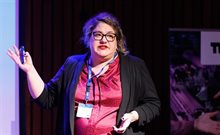
At the heart of Renaissance are parsers, static analysis and a configurable graph-based representation that integrates software information across multiple abstraction levels. “This ranges from directories, files, classes and functions to libraries, executables, interfaces and architectural components,” explains Rosilde Corvino, senior research fellow at TNO-ESI and technical lead of several projects based on the technology. “Every night, Renaissance extracts this information and combines it in a graph representing the software system.”
This system view not only provides better insight, but it also speeds up analysis and enables automated software transformations. Engineers can identify a recurring pattern in the graph and use Renaissance to locate and transform occurrences throughout a codebase. The economics become particularly attractive when a relatively simple modification has to be repeated hundreds or thousands of times.
Read more in Bits & Chips, issue October 23, 2026
Contact us for more info
-

Rosilde Corvino
Job title:Senior Research FellowSpecialisation:Software Maintenance and Evolution-
E-mail:E-mail Rosilde
-
LinkedIn:Rosilde on LinkedIn
-
-

Jos Hegge
Job title:Program ManagerSpecialisation unknown-
Telefoon:+31 88 866 54 20
-
E-mail:E-mail Jos
-
LinkedIn:Jos on LinkedIn
-