
System & software testing
Model-based Testing (MBT) is a promising technique based on formal foundations to help address the challenges of efficiency and effectiveness prevalent in industry. The term MBT encompasses the processes and techniques for the automatic derivation of abstract test cases from abstract models, the generation of concrete tests from abstract tests, and the manual or automated execution of the resulting concrete test cases.

Ensuring reliability before release
As cyber‑physical systems get more complex - driven by software‑intensive features, diverse platforms, long lifecycles, and emerging trends like AI and microservices - innovations in testing methods have not kept pace, even though testing remains the cornerstone of assuring product quality, protecting customer trust, and enabling faster time to market with cutting edge innovations. Outdated, manual and ineffective testing practices now struggle with rising variability, frequent updates and upgrades, limited traceability and coverage, costly infrastructure and maintenance, and over-reliance on key domain experts. These challenges slow down delivery, increase costs, and fail to prevent defect leakage to customers.
To remain competitive, manufacturers need to embrace innovative testing approaches that promote collaborative knowledge capturing and analysis, increased test coverage through automation, leverage knowledge in usage profiles and past defects, and automate traceability - reducing risk of defect leakage, while enabling faster delivery of systems with high quality.
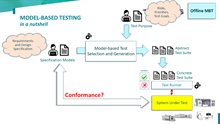
The pressing question we are addressing at TNO-ESI
How can we enable industry to achieve faster time‑to‑market while still delivering the promised quality at lower cost and effort?
Mission
- Keeping testing in pace with system and technology developments
- Provide insights and confidence in system quality aspects
- Contributing to improved system quality
At ESI we have deep expertise and a rich history of projects with our industry partners in developing model-based testing (MBT) methodologies and applying them successfully into practice. Such a method presents a significant step forward from script-based/keyword-driven testing practices in into practice. Such a method presents a significant step forward from script-based/keyword-driven testing practices in industry, also known as test-driven development/behavior-driven development. In projects with our industry partners we have validated our methodology in both green-field and brown-field situations, covering component, integration, system, acceptance testing phases. To address the practical limitations of formal techniques and challenges posed during adoption by engineers, we intend to investigate the use of AI assistance to augment our methodology, for e.g., modeling assistants to ease adoption of a model-based approach, test generation assistants to steer the generation of tests based on insights from usage profiles and past defects, etc.
Successful stories
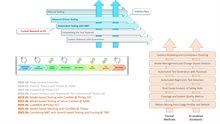
Further information
To realize this vision. the systems and software testing expertise group at ESI is developing a Model-based Verification and Validation Methodology to empower engineers and architects to design, implement and qualify systems with high confidence/guarantees on quality, while reducing cost, effort and lead times.
Contact us
-

Benny Akesson
Functie:Science LeadSpecialisatie niet bekend-
Telefoon:+31 88 866 54 20
-
E-mail:E-mail Benny
-
LinkedIn:Benny on LinkedIn
-
-

Debjyoti Bera
Functie:Senior Research FellowSpecialisatie:System and Software Testing-
E-mail:E-mail Debjyoti
-
LinkedIn:Debjyoti on LinkedIn
-