
Performance engineering of flexible manufacturing systems using LSAT
Flexible manufacturing systems are characterized by interleaved product flows and shared (production) resources, leading to complex routing of products through the manufacturing pipeline. This makes it challenging to predict performance during the early design phase and to design a safe and optimal product flow. LSAT provides a model-based engineering solution to this challenge. LSAT is a methodology to quickly assess the performance realized by different system designs, by capturing system structure, system behavior, and timing characteristics in a lightweight executable model.
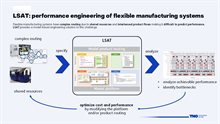
Commercial benefits
LSAT provides the following commercial benefits:
Support contract negotiations
Reduce risk
Reduce cost
Technical benefits
LSAT provides the following technical benefits:
Resource interactions modeled explicitly, and shown in Gantt chart
High-level and concise modeling: only model behavior aspects relevant for productivity
Automatically compute schedule and productivity enabled by the precise semantics
Faster design-space exploration to assess impact of design decisions in a structured way
Compare execution logs with model to diagnose issues in the field
Contact us
-

Benny Akesson
Job title:Science LeadSpecialisation unknown-
Telefoon:+31 88 866 54 20
-
E-mail:E-mail Benny
-
LinkedIn:Benny on LinkedIn
-
-

Bram van der Sanden
Job title:Senior Research FellowSpecialisation:System Performance-
Telefoon:+31 88 866 54 20
-
E-mail:E-mail Bram
-
LinkedIn:Bram on LinkedIn
-